
at the Market
ArtPrize
September 18–October 3
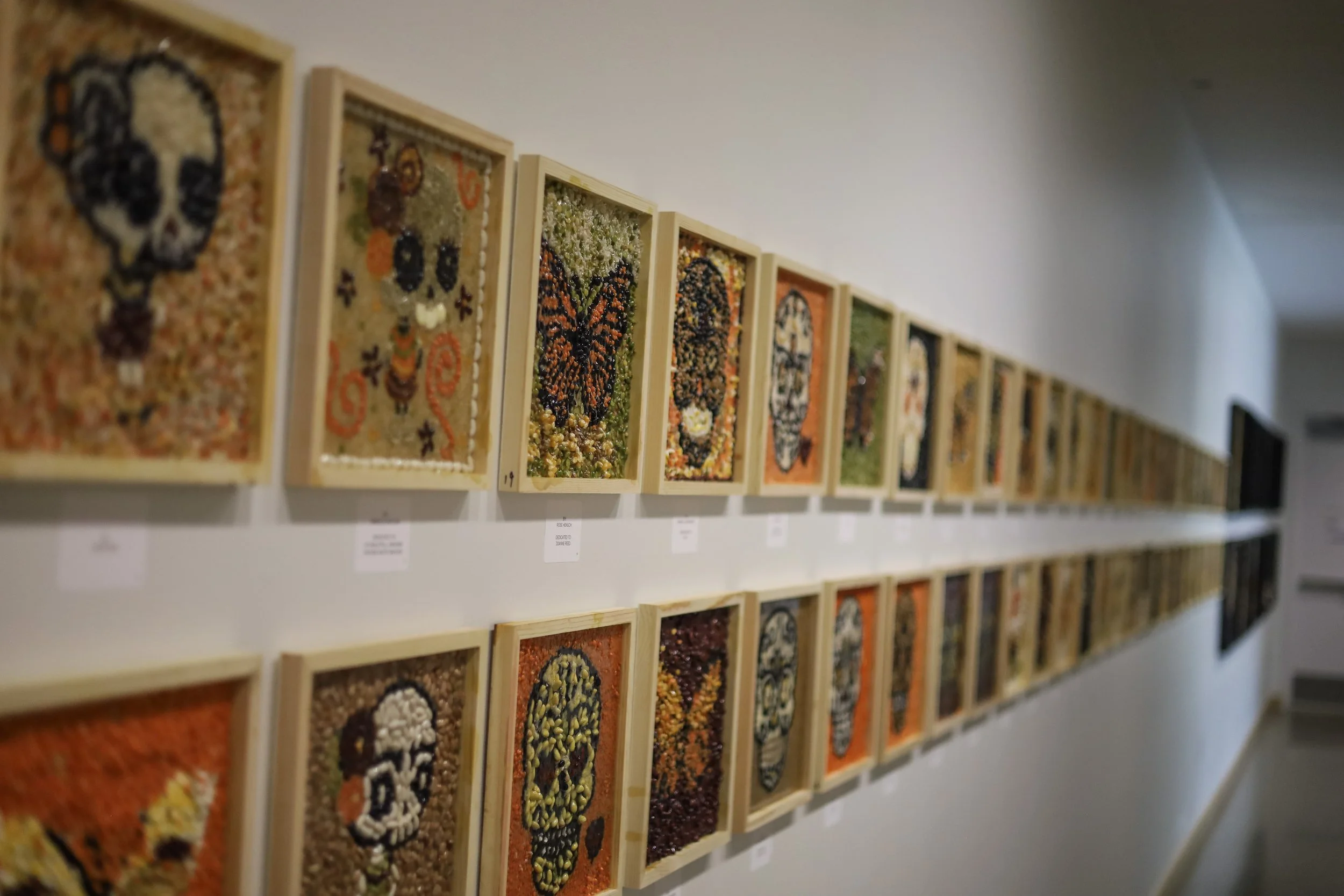
Have a bite to eat and enjoy ArtPrize at the Market with two featured artists showcasing organic hanging sculptures, Mexican culture-inspired seed art, a 10 foot Dia de los Muertos Altar, and 92 community-made pieces.
Featured Artists
Mark Hopkins
Arturo Morales Romero
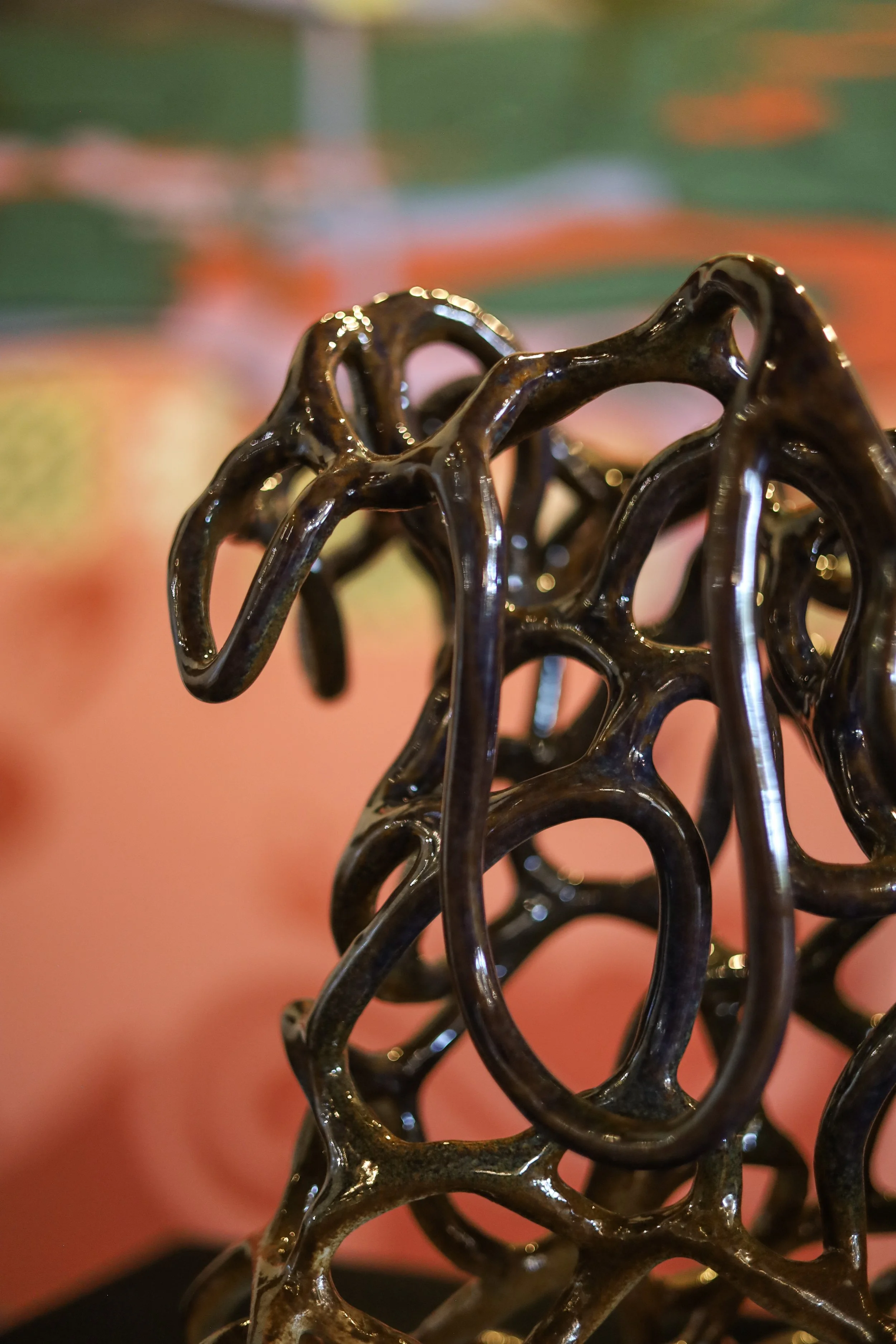
The Aquatic Desert Collection
By Mark Hopkins
A 6-sculpture collection exploring stillness, movement, nothingness, and fluidity. Displayed at Rák Thai through October 3. VOTE HERE
-
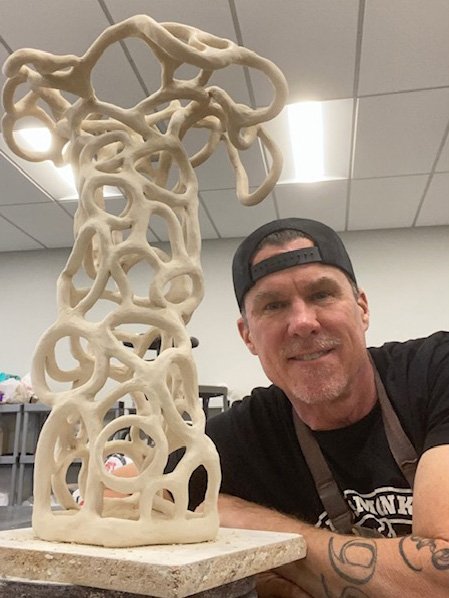
Mark Hopkins (age 56) grew up in Kalamazoo, MI, attended Hope College (undergrad) and Aquinas College (masters) and then later relocated to Ahwatukee, AZ. After 34 years of not touching clay since minoring in art at Hope College, Mark recently “fell in love” again with ceramics at South Mountain College in Arizona under the instruction of Tom Budzack. Having lived approximately half his life in the water-filled, winter-wonderland of Michigan and half in the dry, barren, dusty desert of Arizona, Mark has created this grouping of hand built ceramic pieces entitled “The Aquatic Desert Collection.”
-
This collection consists of five pieces entitled “Forever Ago,” “Inspiration,” “34,” “Lessons Learned,” & “Expected.” In these separate but collective pieces, he’s attempted to combine and contrast the elements of quiet stillness with flowing movement and arid nothingness with unpredictable fluidity. Sales Notation: Half of proceeds from any sales of any piece(s) will be donated to Families of Fallen Firefighters.
“I prayed to God for patience. He gave me a ceramics class.”
- Mark Hopkins
La Catrina y La Altar
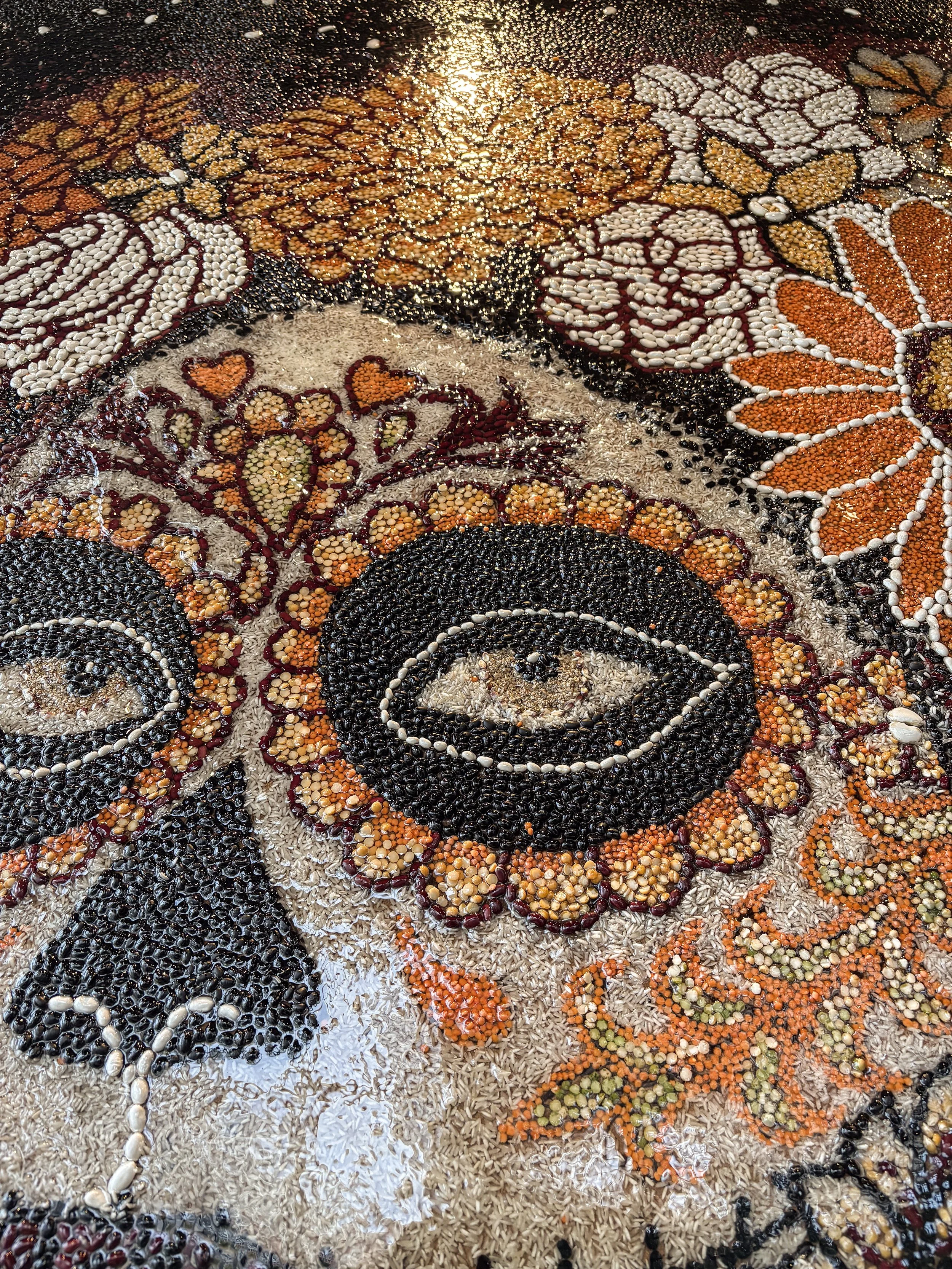
A 9-foot depiction of “La Catrina,” A 10-foot Aztec calendar with a functional Dia de Los Muertos altar, and 92 community-made pieces—all created using traditional Mexican seeds. Displayed on the second floor through November 2. VOTE HERE
By Arturo Morales Romero
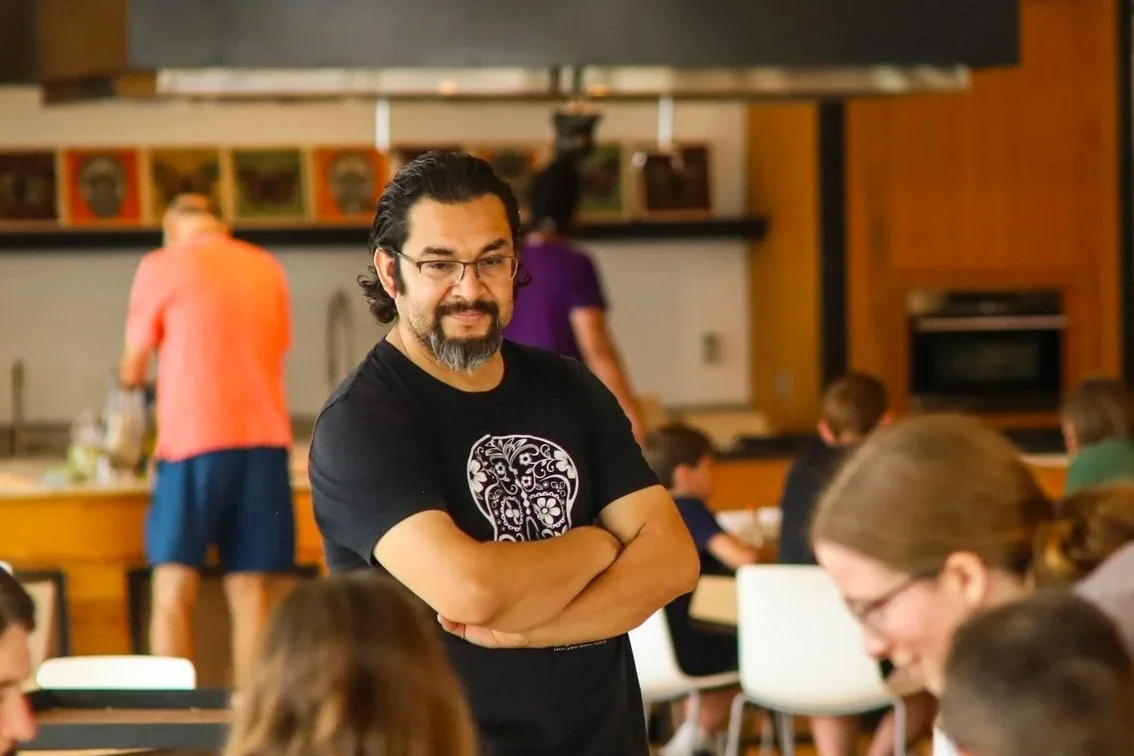
-
Arturo Morales Romero was born in Tepetixtla, Mexico where he found his passion for the arts at the age of five while playing in the water where the pebbles of distinct color melted and mixed between his feet and since then, he has used colors to express himself to the world.
Arturo lived on a farm with his grandparents until he and his family migrated to Visalia, California where he became fascinated with murals because they can be understood and enjoyed by everyone no matter their social status.
In 2000, Arturo moved to North Carolina where he faced the challenge of hate due to his ethnicity, causing him to stop painting murals completely. In 2014, he and his family moved to Grand Rapids, Michigan which turned out to be an art heaven. This encouraged Arturo to start painting again leading to reclaimed pride and liberation from the negative vibes of people who are blinded by hate. Arturo is happy to call GR home and considers his Aztlan mural to be a gift to the community that welcomed him.
10% of his commissions allow him to provide 100% free art materials and lessons to children at the Mexican Festival where he teaches how to paint through the lenses of history, culture, respect, and love. For this, he thanks God, his wife Erika, his three sons Eloy, Emiliano, Julio, and his two daughters Pilar and Alicia Xitlali. They give him the inspiration and strength to keep creating.
-
BE A PART OF THIS DISPLAY BY BRINGING A PERSONAL ITEM THAT HONORS A LOVED YOU’VE LOST AND PLACE IT ON THE ALTAR.
Arturo created the Aztec solar calendar with seeds to teach culture, agriculture, healthy eating, and history. He was inspired to create this piece after a visit to the Museum of Anthropology in Mexico City.
Seeds are used that Native American communities domesticated over 3,000 years ago which helped them establish civilizations including the Incas, Olmecs, Mayan, Aztecs, Tlaxcaltecas, Otomis, and many other indigenous groups to north, central, and south America.
Arturo utilizes the shapes and natural colors of corn, beans, pumpkin seeds, chili seeds, and other “sister seeds” in his work. They are called sister seeds because when planted near each other, they work together to thrive and survive. Beans provide nitrogen to the soil which nourishes nearby corn. Pumpkins between the rows of beans and corn have leaves that cover the ground, keeping the moisture from evaporating too quickly. Hot chilis serve as natural pesticide that kept insects away. These innovations led to high production which can feed a great number of people. Through this, fertile land was created, establishing entire empires like the Aztecs.
Sesame seeds and canary (alpiste) seeds are also used. Aztecs, Toltecs, Tlaxcaltecas, and other native groups believed that sesame is food for the gods, only to be eaten by royalty. During times of drought, natives used canary seeds to make tortillas, tamales, and a hot beverage (atole). With these dishes, people were able to survive harsh times and endure.
Thousands of years have passed since these seeds were domesticated; these same seeds keep civilizations moving forward. Milpa soup recipe: water, salt, green beans, tender corn, green pumpkin, and green pepper. With this recipe you will have all the nutrients that your body needs.
-
It is believed that La Catrina has roots in Aztec mythology through the goddess Mictecucihuatl, the queen of the underworld who ruled Mictlan with her husband, Mitlantecutli. Mictecucihuatl’s role is to watch over the bones of the deceased and preside over the ancient festival of the dead. This festival evolved into the modern day “Día de los Muertos”
As social satire in 1910, artist Jose Guadalupe created the original etching of a female skeleton wearing a fancy hat with flowers, and he named it “La Calavera Garbancera.” This etching mocked working class Mexicans who tried to copy European style while hiding their indigenous heritage.
In 1947, famous artist Diego Rivera immortalized this figure in a mural depicting her in an elegant gown. Since then, “La Calavera Garbancera” has been known as “La Catrina,” a fancy lady.
For ArtPrize 2026, Arturo Morales Romero created this nine foot tall image of “La Catrina” to represent the beauty of ancient mythology, beliefs, history, identity, and culture. He used seeds to represent the beginning of a new life when one’s life in this world ends.
Arturo believes life in this world is to be enjoyed by everyone, not to be too serious, or trapped in modern day norms created by man. In the end, no matter how much physical wealth individuals accumulate, no one escapes death.
-
In celebration of Día de los Muertos (Day of the Dead) the community was asked to participate in this ArtPrize collaboration led by Arturo Morales Romero and the Grand Rapids Downtown Market.
Día de los Muertos is a multi-day cultural celebration where families welcome back the souls of their departed relatives for a joyful reunion. The holiday blends ancient 3,000-year-old indigenous Mesoamerican and Aztec rituals with Catholic holy days brought by the Spanish. Indigenous cultures viewed death not as a final end, but as a natural part of the ongoing cycle of life.
Key traditions include building altars (ofrendas) that are then decorated with photographs, candles, and bright orange marigolds (cempasúchil) dedicated in remembrance to deceased loved ones. Personal items, objects associated with fond memories, favorite meals, sweet bread (pan de muerto), and decorated sugar skulls are placed on the altar as well.
This exhibit uses indigenous Mexican-grown seeds and beans to depict the iconic visuals surrounding Día de los Muertos. Community members were asked to complete their personal or group piece with a deceased loved one in mind. This work is dedicated to those souls.
Thank you to the community for joining us in this meaningful exercise that honors Mexican culture, a passion for food, and the loved ones who are no longer at the dinner table but still have a place setting.
“So why be too serious in this life? Enjoy life with your loved ones and create beautiful memories—life is a breeze.”
- Arturo Morales Romero